Why Peoria AC Compressors Fail in July and What Emergency Repair Actually Costs
Why Peoria AC Compressors Fail in July and What Emergency Repair Actually Costs
July in Peoria pushes air conditioners to their limits. Outdoor temperatures live above 110 degrees for hours at a time, overnight lows often sit in the 90s, and monsoon dust loads the coils. When a compressor quits during that heat, the home can gain 2 to 3 degrees per hour. In a Vistancia or Westwing Mountain two-story with sun exposure on the west side, indoor temperatures can race past 90 before sunset. That is why emergency AC repair in Peoria is a heat safety issue first and a mechanical problem second.
What actually kills compressors in a Peoria July
Three conditions dominate the emergency calls in July and August across Peoria zip codes 85382 and 85383, with similar patterns in 85381 and 85345. Each drives up compressor temperature, amperage draw, or both. That is the failure pathway that matters here. A compressor that runs hot and hard every afternoon will eventually hit thermal overload, damage winding insulation, and lose compression ratio long before a mild-climate unit would.
High head pressure from extreme ambient and coil fouling
At 112 to 115 degrees Fahrenheit ambient, the condensing temperature rises, which forces the compressor to work against higher head pressure. Add a dirty condenser coil after a haboob rolls across Lake Pleasant Parkway or the Loop 303 corridor, and heat rejection degrades further. The compressor runs longer, amperage climbs, and internal motor temperature spikes. A scroll compressor can tolerate some abuse, but sustained high head pressure will wear thrust surfaces and accelerate electrical breakdown.
Field reality in Peoria: a 4-ton R-410A system with a fouled condenser and a 115-degree afternoon can show head pressures exceeding 425 psi while suction pressure falls. That shifts the superheat and subcool targets and pushes discharge temperatures high enough to trip the internal thermal protector or cook the oil film. Once the varnish smell is present in the outdoor unit, the clock is ticking toward a major repair.
Voltage stress and component failures during monsoon season
Monsoon storms do two things that AC systems dislike. First, they throw dust into the condenser fins that traps heat. Second, they produce power events. Lightning near Bell Road or Grand Avenue can create surges that take out control boards and inverter drives. More common are sag and surge cycles during utility switching, which pit contactor faces and overheat capacitors. A tired run capacitor shifts the motor out of its designed phase balance. The compressor tries to start, hums, and stalls. Repeated hard attempts can lock the rotor and overheat windings. In a variable-capacity inverter system, a surge can damage the inverter board, which shows up as intermittent no-cool that turns into a full failure the next hot day.
Refrigerant charge issues exposed by high ambient
A minor leak that goes unnoticed in April becomes a no-cool in July. Low refrigerant reduces mass flow through the evaporator coil. The coil runs too cold, airflow drops, and the system can freeze. Then the compressor faces liquid floodback at restart. On the other side, an overcharged system can back up liquid into the condenser at high ambient, reduce condenser subcooling stability, and spike head pressure. In Peoria, accurate charge means reading superheat and subcool under real 110-plus outdoor conditions and adjusting targets for the Sonoran Desert load. Charts written for 95-degree design days do not fit what the equipment faces in July on the north Peoria foothills.
Why Peoria neighborhoods see different stress patterns in summer
Peoria is not flat. The city climbs from the central valley floor near 1,150 feet up into foothill communities. Homes in Northpointe at Vistancia, Westwing Mountain, and Sonoran Mountain Ranch sit roughly 18 percent above the Phoenix Valley floor elevation. That shift alters microclimate and wind exposure. In those foothills, late afternoon sun and slope winds combine to dry out vegetation, push dust, and raise condenser air temperatures around pad-mounted units. At the same time, oversized great rooms and two-story foyers common in Trilogy at Vistancia and Blackstone at Vistancia keep return air temperatures higher in the evening. The compressor experiences longer continuous runtime and fewer full off cycles to cool down.
South Peoria near Old Town Peoria in 85345 brings a different picture. Older duct systems leak, attic insulation is often thin, and supply registers may be undersized for current equipment. That yields high static pressure, weak airflow across the evaporator coil, and a compressor that carries a constant high compression ratio load to chase setpoint. Fletcher Heights and Arrowhead Ranch homes in 85382 and 85308 often still run original or second-generation condensers from the 1990s and early 2000s. Aging motors and contactors that made it through the mild days of spring fail in July when duty cycle jumps.
Symptoms that point to compressor stress versus peripheral faults
Emergency AC repair requests come in with similar descriptions. Sorting symptoms saves time on site and gets cooling back sooner. Compressed July response windows across Peoria, Glendale, and Surprise make that triage important. A technician reads clues that suggest whether the compressor is the victim or the perpetrator.
- Outdoor unit hums but the fan runs and indoor blower runs. Often a failed run capacitor or pitted contactor preventing compressor start, not a dead compressor.
- Outdoor unit starts and stops every minute in the afternoon. Short cycling from high head pressure due to a dirty condenser coil or overcharge problem, which will damage a compressor if ignored.
- No-cool after a haboob with noticeable dust blanket on the condenser. Expect coil fouling driving high head pressure and thermal trips. The compressor is at risk but may be salvageable.
- No-cool with ice on the refrigerant line near the air handler. Low refrigerant or airflow restriction caused a frozen evaporator coil. The compressor is starving and in danger of floodback on restart.
- Loud clicking from the outdoor unit but no start, often after a lightning-heavy monsoon. Likely contactor failure, failed capacitor, or surge-damaged control board. The compressor may be fine.
Diagnostic approach that works in Peoria heat
Accurate diagnosis beats fast parts swapping. In July, the combination of high ambient and local dust load makes textbook numbers useless unless adjusted. A competent emergency diagnostic in Peoria includes a refrigerant pressure check, superheat and subcool measurement under current conditions, capacitor microfarad testing against nameplate values, compressor amperage draw compared to rated load amps, and a hard visual on condenser coil cleanliness. Electronic leak detection and a nitrogen pressure test matter if charge looks off and the system needs repair rather than a top-off. On variable-capacity inverter systems, control board fault codes and DC bus voltage checks isolate true compressor failures from electronic faults.
In master-planned communities along the Happy Valley Road corridor, many installations feature longer line sets routed through hot attics. That increases refrigerant volume and subcooling sensitivity. A precise liquid line temperature and pressure reading is critical in those homes to prevent overcharge that only shows up at 4 p.m. When the attic is 140 degrees. Careful technicians also confirm condenser fan speed and blade pitch on older units in 85382 that may have replacement parts installed over the years. Wrong fan blades reduce airflow across the condenser and trick pressures into compressor-killing ranges.
What emergency AC repair actually costs in Peoria in 2026
Peoria sits in APS service territory, which influences rate structures and the economics of running AC through peak periods. It does not change what parts cost on a Friday night in July. It does shape after-hours dispatch strategy because evening peak loads shift technician coverage. Residents ask for clear numbers up front. These are typical 2026 Peoria ranges for emergency AC repair, based on residential split systems seen from Ventana Lakes and Westbrook Village to Vistancia and Terramar. Exact invoices depend on brand, tonnage, and accessibility in attics or rooftops.
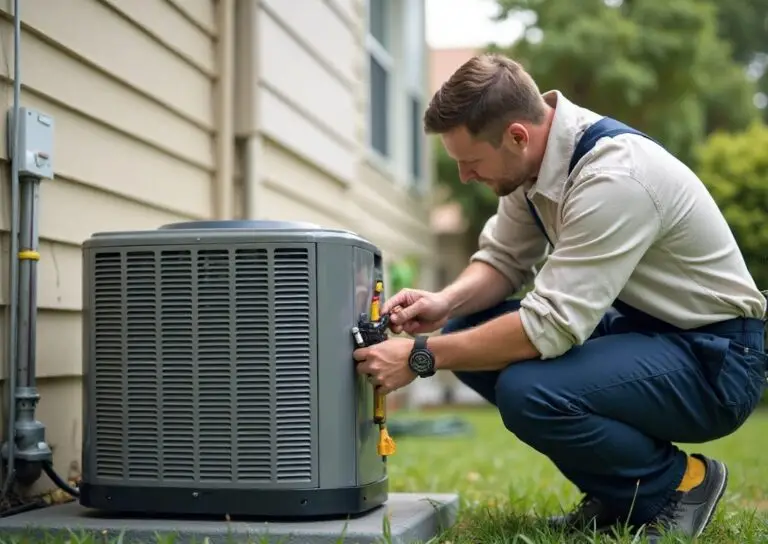
- Emergency diagnostic and service call: 129 to 229 in APS territory, depending on time of day and weekend or holiday. After-hours surcharge typically adds 75 to 150 to daytime rates.
- Capacitor replacement: 180 to 420 for common dual run capacitors on single-stage systems. Variable-speed inverter systems use different components and price differently.
- Contactor relay replacement: 160 to 320 depending on amperage rating and enclosure condition. Burned wiring repairs add to labor.
- Refrigerant leak check and recharge: 350 to 900 for R-410A, depending on pounds added and leak investigation depth. If a leak repair and nitrogen pressure test are required, totals can reach 700 to 1,600. Systems transitioning to R-454B from 2025 forward use different refrigerant and may require component compatibility checks.
- Blower or condenser fan motor replacement: 450 to 1,200 for PSC and standard ECM motors. ECM module-only replacement ranges 300 to 600. Full ECM blower assemblies on larger systems can reach 1,300 to 1,800 with labor in tight attic spaces.
Compressor-specific repairs vary more. A hard-start kit to reduce inrush current on an older scroll compressor runs 200 to 400 installed and can extend life in high-ambient starts. A refrigerant filter drier and system evacuation after a burnout, with line set flushing, adds 250 to 600 to the job. A full compressor replacement on a residential split system in Peoria typically ranges from 1,200 to 3,500 installed, driven by compressor type, refrigerant, and accessibility. Variable-capacity inverter compressors sit at the higher end and often push a repair-versus-replace decision, especially in older equipment.
Emergency commercial rooftop service along Bell Road or the P83 Entertainment District follows a different structure and often includes crane costs and same-night parts runs. Those invoices are case-specific and depend on equipment size and building access.
Why emergency AC repair urgency in Peoria is about heat safety, not utility shutoff
During National Weather Service Extreme Heat Warnings, indoor heat exposure drives the decision to dispatch fast. In 2026, SRP has a July and August disconnect moratorium and will not disconnect any customer during those months. That policy is a strong safety backstop for SRP territory. Peoria, however, is in APS territory. The practical effect for local homeowners is that cooling continuity depends on the health of the AC system itself. The surprising pattern technicians see is this: during prolonged heat waves, households near Lake Pleasant Regional Park and along the Lake Pleasant Parkway corridor reach 88 to 92 degrees indoors by late afternoon after a compressor stalls, even with blinds closed and ceiling fans on low. That range becomes dangerous for infants, older adults, and people with medical conditions. The job is to get the system stable again fast, not to argue with a thermostat.
Compressor triage that saves equipment in July
Rapid steps on site protect the system from compounding damage. A technician who hears a compressor trying and failing to start tests the capacitor immediately, checks voltage at the contactor, and measures locked rotor amperage against nameplate. If the run capacitor is weak, a replacement and a controlled restart with an amp clamp on the common lead shows whether the compressor winds survived. If pressures and temperatures look normal after restart, the job pivots to cause analysis. That is usually coil cleaning, airflow correction, or charge adjustment.
If the compressor is seized or open-wind, the next move is to document age, model, refrigerant, and warranty. Many Peoria systems installed in 2013 to 2016 still have parts warranties on compressors. Warranty claim handling can clip thousands off replacement cost. A quality contractor replaces the filter drier, flushes the line set if a burnout occurred, pulls and holds a deep vacuum verified with a micron gauge, and sets charge using superheat and subcool in real ambient conditions. Skipping those steps after a compressor replacement shortens the new compressor’s life in this climate.
How equipment type shifts failure modes and repair choices
Single-stage, two-stage, and variable-capacity inverter systems each show their own failure patterns here. Older reciprocating compressors in south Peoria 85345 ranch homes fail mechanically more often after repeated hard starts. Scroll compressors dominate newer Arrowhead Ranch and Fletcher Heights homes and handle liquid better but still overheat with high head pressure and low airflow. Variable-capacity inverter compressors common in 2010s custom homes near Preserve at Boulder Mountain rely on electronics. Monsoon surges that a scroll system might shrug off can kill an inverter board. Replacing a damaged board can cost almost as much as a compressor replacement, which drives many owners to discuss full system replacement if the air handler and coil are older or R-22 vintage.
Technicians also see duct issues in the north Peoria foothills. High static pressure from restrictive returns or undersized filter racks leads to low evaporator airflow. That forces the compressor to run at higher compression ratios to hit setpoint. Manual D duct design errors from original construction show up as humidity swings and short cycling in July afternoons. Correcting those underlying issues protects the compressor after a successful emergency repair.
R-410A today, R-454B tomorrow, and what that means in Peoria attics
Most residential systems in Peoria still run R-410A. As manufacturers transition to lower global warming potential refrigerants like R-454B and R-32 starting in 2025 production, repair planning changes. Mixing refrigerants is not an option. If a system originally charged with R-410A loses a compressor and the owner wants to install a new outdoor unit that ships with R-454B, the indoor coil and metering device must be compatible, and the line set may need attention. In emergency July conditions, many owners choose a like-for-like compressor replacement if the system is otherwise in good shape and warranty supports it. If the system is at or past its expected service life, a planned replacement after stabilizing the home may make more sense.
Map-pack reality: Peoria AC failures cluster with weather and dust
Call volume spikes across Peoria after the first major haboob of the season. Fine dust from a storm that moves off the Sonoran Preserve and Twin Buttes area packs into condenser fins like felt. It does not blow off on its own. After every significant storm, technicians can predict clusters of no-cool calls along Happy Valley Road and into Vistancia Village within 24 to 48 hours as discharge temperatures climb and safety devices trip. Homeowners in Westbrook Village and Ventana Lakes call for different reasons. There, the age of equipment and longer runtime during early mornings trigger failures as overnight lows stay warm and the system never gets a rest.
Emergency cost patterns by time of day and location
In 85383 and along the Loop 303 corridor, late afternoon and early evening put the heaviest load on dispatch. After-hours surcharges apply when technicians arrive outside standard business windows. The surcharge in Peoria typically runs 75 to 150 on top of the core diagnostic. In 85381 near Arrowhead Towne Center and the P83 Entertainment District, commercial service requests can crowd residential queues after power events. A contractor with actual 24/7 coverage balances those demands so a 10 p.m. No-cool in Northpointe at Vistancia still sees rapid arrival.
Repair versus replace decisions at 110 degrees
Emergency visits sometimes uncover bigger problems. A failed compressor in a 14-year-old condenser with a coil that is leaking is a tipping point. Replacing a compressor and then chasing leaks is not usually the best spend. In 2026, the federal Inflation Reduction Act 25C tax credit offers up to 2,000 for qualifying heat pump installations and up to 600 for qualifying central AC replacements that meet efficiency criteria. APS rebate programs changed following Arizona Corporation Commission Decision No. 81584, and the referenced APS rebate program end date of January 1, 2026 affected some replacement timelines. For Peoria homeowners planning a replacement after an emergency stabilizes the home, it is worth confirming current APS incentives and comparing those to federal credits.
If a same-day temporary repair can bring cooling back safely, many owners in Arrowhead Ranch and Fletcher Heights schedule a next-day consultation to review Manual J load calculations, Manual S equipment selection, SEER2 efficiency ratings, duct condition against Manual D, and thermostat control strategies. That review prevents repeat compressor stress after a new install. For example, a variable-capacity inverter system paired with an ECM blower motor and properly sized return air reduces compression ratio stress at 4 p.m. And shifts bills favorably under APS rate structures. That is not a sales pitch. It is what keeps the new compressor alive for the next decade in this climate.
Commercial properties along Bell Road and Grand Avenue
Light commercial buildings in Peoria run rooftop units that face full sun and wind all day. Monsoon gusts exceeding 60 mph push debris under fan guards and bend fins. When a compressor fails on a rooftop unit above the P83 Entertainment District or near the Peoria Sports Complex, the repair plan adds safety, crane access, and roof coordination. Emergency costs expand to include lift rental and overtime electrical support if surge damage traveled through building systems. A clear diagnosis is even more important in this setting because component boards, economizers, and variable frequency drives complicate the picture.
Shareable local finding: Vistancia elevation and compressor overheat timing
Technicians tracking discharge temperature logs on north Peoria foothill homes report a consistent pattern. In Vistancia and Northpointe at Vistancia, compressor thermal overload trips peak 20 to 35 minutes earlier in the late afternoon than in similar-sized homes on the valley floor near 83rd Avenue and Bell Road during multi-day heat waves. The likely contributors are higher sun exposure slope angles and slightly reduced evening downdrafts. The elevation context is only 18 percent above the valley floor, yet the effect is strong enough to show up in service records. The practical impact for residents in these neighborhoods is a narrower error margin on coil cleanliness and refrigerant charge. When those are right, trips disappear.
What homeowners in 85345, 85381, 85382, and 85383 can expect from a solid emergency visit
Expect a methodical technician to stabilize the system first, then fix the cause, and finally confirm performance under load. Stabilization can mean replacing a capacitor to get the compressor running within minutes if the readings confirm it is safe. Fixing the cause may involve cleaning a heavily fouled condenser coil after a dust event near Lake Pleasant, adjusting refrigerant charge using subcool and superheat, or replacing a contactor that pits under APS switching loads. Confirmation includes temperature split across the coil, compressor amp draw under design load, and a quick scan of airflow restrictions in tight attic returns common in 85345 ranch homes.
What Sonoran Desert climate demands from emergency-ready contractors
Readings at 105 do not tell the story at 115. Emergency technicians working Peoria summer need training that covers superheat and subcool targets at high ambient, compressor protection during hard-start scenarios, and the diagnostics on variable-capacity inverter systems from brands like Trane, Lennox, Carrier, Goodman, American Standard, Rheem, York, Bryant, Daikin, LG, Bosch, and Mitsubishi Electric. They also need EPA Section 608 certification to handle R-410A and the 2025 transition refrigerants like R-454B and R-32, and they should follow the ACCA Quality Installation Standard even during emergency work so short-term fixes do not create long-term failures.
Heat safety note for age-restricted and medically sensitive homes
Trilogy at Vistancia, Westbrook Village, and Ventana Lakes have occupant profiles that raise heat safety stakes. During Extreme Heat Warnings, a technician who walks into a 90-degree living room in an age-restricted home will often check living space temperatures first and confirm ventilation while diagnosing. That few https://westus1.blob.core.windows.net/grand-canyon-home-services/peoria/emergency-ac-repair-peoria-az-247-same-day-service.html minutes of attention matters. Many contractors also adjust dispatch priority for homes with elderly occupants or young children in these communities. That practice saves health risks while the repair proceeds.
Where emergency AC repair aligns with long-term reliability
Once cooling is back and the home is safe, owners often want a quick path to avoid the same call next week. In Peoria, that means two practical checks. First, condenser coils need to be truly clean after monsoon dust, not just rinsed with a hose. A professional cleaning restores heat transfer. Second, airflow across the evaporator coil must meet equipment needs. That may involve filter rack upgrades to accept deeper high-efficiency media, return air enlargements in tight 85345 ducts, or ECM blower programming that fits local duct resistance. Those corrections reduce compressor workload every July afternoon.
Availability and pricing transparency during July and August
During the peak months, the difference between a smooth repair and emergency AC repair services, local emergency AC repair, 24/7 emergency AC repair, same-day emergency AC repair, emergency home AC repair, emergency residential AC repair a frustrating experience is often scheduling clarity and price clarity. A contractor that posts typical emergency ranges and explains after-hours surcharges prepares residents in Glendale, Surprise, Sun City, and Sun City West who call from the edges of Peoria service routes. Upfront flat-rate pricing for common repairs such as capacitors, contactors, and drain clearing gives homeowners in Arrowhead Ranch and The Meadows reliable estimates before work begins. Clear warranty checks for compressor failures and guidance on federal 25C tax credits when replacement is the right choice close the loop.
Credentials, dispatch, and how to request emergency AC repair in Peoria
Grand Canyon Home Services operates from 14050 N 83rd Ave Suite 290-220 in Peoria, AZ 85381 and serves Peoria and Maricopa County with actual 24/7 emergency dispatch. The team handles emergency AC repair across Vistancia, Westwing Mountain, Sonoran Mountain Ranch, Fletcher Heights, Arrowhead Ranch, Westbrook Village, and Old Town Peoria, with extended coverage into Surprise, Glendale, Sun City, El Mirage, Litchfield Park, Goodyear, Avondale, Waddell, Wittmann, Youngtown, Tolleson, and north Phoenix. Technicians are NATE certified and EPA Section 608 certified. The company is Arizona ROC licensed, bonded, and insured under the Arizona Registrar of Contractors and is BBB Accredited. Emergency AC repair calls include upfront flat-rate pricing and same-day availability during summer peaks when possible. To request emergency AC repair Peoria AZ, call +1-623-777-4779 or visit https://grandcanyonac.com/peoria-az/emergency-ac-repair/. If a repair reveals a failed compressor in an older system, the team can stabilize cooling and review replacement options that qualify for federal 25C tax credits. Dispatch runs 24 hours a day, seven days a week.